


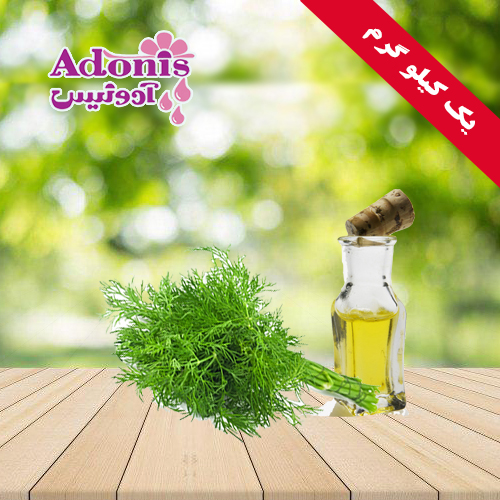
Chemical Compositions of Dill Essential Oil
The entire vegetative body of the plant contains essential oil. In the vegetative body, the amount of essential oil is between 0.8-1.6%. Fully ripe seeds contain the highest amount of essential oil, and its amount has been reported to be between two and five percent. The amount of essential oil in the stem of the plant is very low, and is between 0.1-0.5 percent..
The most important Become an active ingredientIts essential oil is decarone, which is present in both the vegetative body and the seeds. In the vegetative body of Decaronas, its content is 25-35%, and in the leaf, its content is 40-60%. Also, the vegetative body contains 15-25% alpha-flandrone and the seeds contain 20-28% limonene. The color of the essential oil from the vegetative parts of dill is yellow, but the essential oil from the seeds is colorless and transparent. Dill fruit contains 2.5 to 4 percent essential oil, the amount of which varies based on geographical region and season, reaching up to 7.7 percent. The majority of the essential oil of dill fruit is D-carnet, limonene, and alpha-flandrene, all three of which comprise about 90% of the essential oil.
Other compounds in dill include: Dilanoside, coumarins, kaempferol and its 3-glucuronide compound, vinins, myristicin and other flavonoids, phenolic acids, protein (about 16%), fat (about 10-15%). The essential oil of dill aerial branches, which is obtained from its fresh branches by steam distillation, contains 28 to 45 percent of ketone compounds such as carotenoids, which varies based on the harvest season. The root of the dill plant also contains essential oil, 95% of which is alpha-betapinene.
Uses
Dill is used in the treatment of indigestion, flatulence (especially in children), and spasms.
It is also soothing, laxative, stomach tonic, antiemetic, stimulates milk secretion, diuretic, and lowers blood lipids.
It is also used as a flavoring and fragrance in the food industry and cosmetic products.
When used externally, it has a softening and healing effect, but it is mostly used internally.


